
How WPP’s $400M AI Investment is the Starter Pistol for Boutique Agencies
Most brands treat the Super Bowl like high school prom. Six months of planning, $8M for 30 seconds, a celebrity cameo to prove they’re still breathing. And then Monday morning hits and the sweatpants go back on.
364 days of sweatpants. One day of actually trying. In their attempts to rescue their revenue, WPP just put on their rattiest pair of sweats.
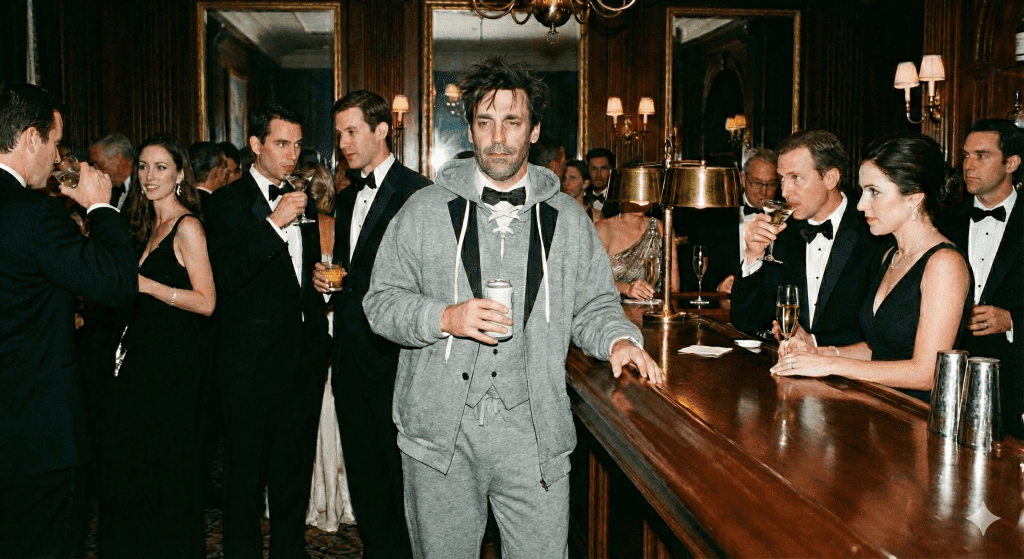
WPP Just Told on Themselves
Late last year, WPP formally launched Open Pro, a self-serve AI platform that lets brands plan, create, and publish campaigns entirely on their own. No agency required.
Sit with that for a second.
The world’s largest advertising holding company, the people who own Ogilvy, Grey, and AKQA, just built a product designed to help brands not need them. They’re down 7.8% in revenue, their own CEO called their results “unacceptable,” and their answer is to hand clients a DIY kit and call it innovation.
Industry analysts are already asking the obvious question. A Gartner VP put it bluntly: how do you tell premium clients you’re a “world-class strategic partner” while telling everyone else “here’s a DIY tool?” A WPP veteran turned industry advisor said that if he were running one of their agencies right now, he’d have a lot of questions.
WPP’s CTO tried to get ahead of it: “If we didn’t bring Open Pro to market, our clients would simply have used other tools.”
That’s not a product vision. That’s a hostage negotiation with yourself.
Here’s Where WPP Isn’t Wrong
Before we pile on, let’s be honest about something: collapsing your production timeline and budget using AI isn’t optional anymore. It’s the only way any of us get out of this alive.
WPP is right about that part.
The brands and agencies still running on four-month creative development cycles, routing every asset through layers of approval, and treating AI like a novelty will not survive the next two years. The mechanical work of our industry, production, resizing, versioning, publishing, is becoming a commodity whether we like it or not.
Where WPP goes wrong is mistaking the factory for the point.
Open Pro promises 33x content volume. Brand-safe. Compliant. Optimized. Fast. And when every brand on the market runs the same infrastructure, trained on the same data, chasing the same platform algorithms, they all start sounding like the same chatbot having a conversation with itself.
This is not a novel observation. Someone at WPP has absolutely sat in a room and raised this exact concern, probably in the first week of building the thing. Which means one of two things is true: they have a plan for it and they’re not telling anyone, or they’ve decided that volume is a good enough answer for now and they’ll worry about differentiation later. Either way, they’re not talking about it. And for a platform whose entire pitch is “your brand, at scale,” the question of what happens when every brand scales on the same engine is one that deserves a straight answer before the check clears.
Independent Agencies Didn’t Get Into This to Resize Banners
Nobody opened a boutique shop, turned down the safer job, and built a team of genuinely talented people so they could automate their way to mediocrity faster.
They got into this because they believe creativity solves real business problems. Because a great idea at the right cultural moment does things that no production pipeline can manufacture. Because the work matters, not just as a deliverable, but as proof that a brand has something worth saying.
That’s not nostalgia. That’s a competitive advantage no holding company can productize.
But here’s the honest part: having a soul isn’t enough if you can’t act on it fast enough to matter. And that’s exactly the problem the Creative Cadence Framework was built to solve.
What the Creative Cadence Framework Actually Does
The CCF starts with a premise that sounds simple and is actually radical: there is no off-season.
The traditional agency model treats brand bravery as a seasonal event. You save the big swings for the big moments, and the rest of the year you manage the BAU slump, quarterly campaign cycles, slow approvals, and content that’s technically on-brand and completely forgettable.
The Creative Cadence Framework dismantles that hierarchy entirely.
It’s built on a philosophy of being talent-led and AI-accelerated, not system-dependent. Instead of a $400M proprietary platform, the Framework uses a modular cockpit of best-in-class, off-the-shelf AI tools, the same ones available to anyone, used by people who actually know what they’re doing. That combination lets a small, agile team replicate and often exceed the output quantity and quality of a holding company factory at a fraction of the cost.
The focus shifts from efficiency (doing the boring thing cheaper and faster) to effectiveness (doing the brave thing before the moment passes).
The practical result is a dramatically shorter distance to publish. In a traditional holdco environment, a culturally timely idea has to survive approval hell, legal hurdles, and software workflows that were built for quarterly campaigns, not Tuesday morning. By the time it clears, the moment is gone. The Framework uses AI to collapse production timelines from months to weeks, but it doesn’t trade speed for standards. Every piece of content is treated like a mini Super Bowl ad: brave, timely, and built to start a conversation rather than fill a slot.
The Part That Should Make CMOs Uncomfortable
WPP’s promise of 33x more content is a threat disguised as a benefit, if that content is 33x more noise that consumers have already trained themselves to scroll past.
The Creative Cadence Framework offers something different: the freedom to experiment, to pivot on a cultural moment, to act on a signal while your competitor is still waiting for legal to sign off. It treats AI as a power suit for talented people, not a replacement for them. A small, focused team running the Framework can maintain a creative presence that commands the same attention as a $8M media buy, because attention was never really about budget. It was always about relevance.
That’s the part the holdco model structurally cannot deliver. Not because they lack the technology, but because the technology is the wrong answer to the wrong question.
The Real Threat Isn’t WPP
WPP isn’t the villain here. They’re a public company with declining revenue doing what public companies do, pivoting toward a product that justifies the stock price.
The real threat is the CMO (and often a CFO) who sees “33x content volume” and thinks that’s the finish line. The brand that optimizes for output instead of impact. The agency that adopts AI as a cost-cutting move and wonders why nothing they make lands anymore.
Volume without voice is just noise with better distribution.
This Is the Moment Independent Agencies Were Built For
WPP just told the market that the mechanical parts of agency work are becoming a commodity. Production, versioning, publishing: table stakes, automated, done.
That’s not a threat to great independent agencies. That’s the starter pistol.
When the factory work is commoditized, what’s left is exactly what the Creative Cadence Framework is built around: the thinking, the taste, the cultural instincts, and the operational agility to act on all of it before the moment expires. The Framework turns WPP’s $400M infrastructure investment into a liability rather than a moat. Tool-agnostic and talent-focused, it lets agencies adopt new technology in days while the giants are still onboarding legacy clients onto custom platforms built for a world that no longer exists.
You don’t need a $400M stadium to play this game.
You need the discipline to treat every Tuesday like the fourth quarter. And a framework that was actually built for that.
The sweatpants are optional. The mediocrity is not.